
Table of Contents
- Ekonomi Digital di Tahun 2024 Diprediksi Meningkat Didorong Tingginya ...
- Sky News and The Australian to host Australia’s Economic Outlook for ...
- Outlook Perekonomian dan Pasar Keuangan Indonesia Jelang Pemilu 2024 ...
- Attractive yields with low volatility. Fixed income ticks the boxes in ...
- Announcing 2024 economic outlook by Forbes Australia | Julia Vargiu ...
- An economic outlook for Australian businesses- January 2024 | Macquarie
- BPS: Inflasi April 2024 capai 0,25 persen - ANTARA News
- Menanti Pertumbuhan Ekonomi Indonesia Lebih Cerah di 2024 - Bisnis ...
- The Australian economy could be set for a 'soft landing' in 2024
- An economic outlook for Australian businesses- January 2024 | Macquarie
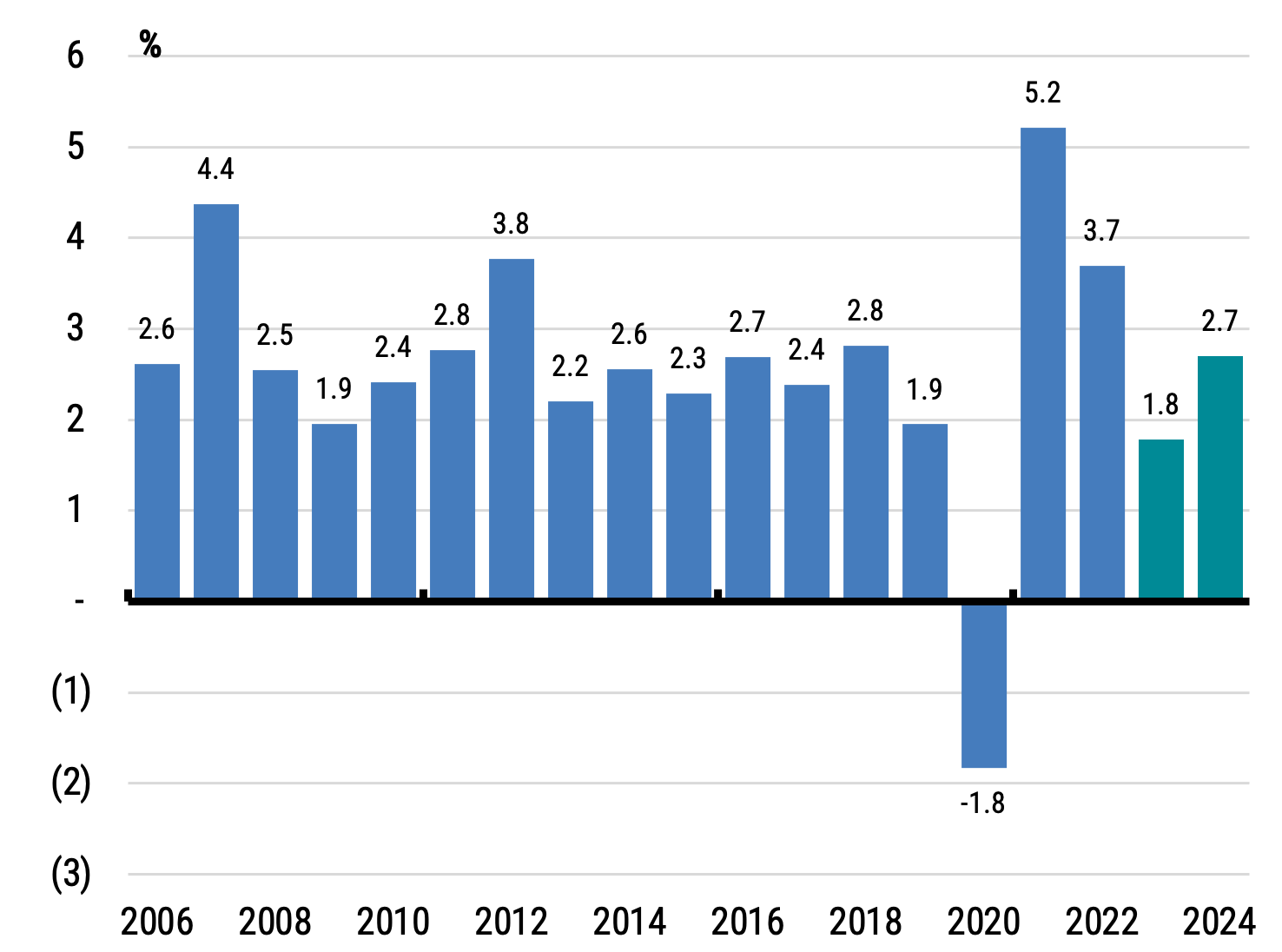


Global Headwinds and Domestic Pressures

According to the Reserve Bank of Australia (RBA), the country's economic growth is expected to slow down to around 2% in 2023-24, down from 2.2% in the previous year. This slowdown is largely attributed to the decline in housing market activity, which has been a key driver of economic growth in recent years. The RBA has also flagged concerns about the labor market, with unemployment expected to rise to around 5.5% in the coming year.
:strip_icc():format(webp)/kly-media-production/medias/2751251/original/014479500_1552556242-20190314-Ekonomi-RI-6.jpg)

Opportunities in a Challenging Environment

In addition, the Australian economy is well-positioned to take advantage of the growing demand for renewable energy and clean technologies. The country's abundant natural resources, including solar and wind energy, make it an attractive destination for investors and companies looking to capitalize on the transition to a low-carbon economy. The government's commitment to reducing greenhouse gas emissions and promoting sustainable development is also expected to drive growth in the clean energy sector.
/2023/05/19/1489869402p.jpg)
Policy Response and Outlook
In response to the economic challenges, the Australian government has announced a range of policies aimed at stimulating growth and supporting businesses and households. These include tax cuts, infrastructure spending, and measures to improve the competitiveness of the economy. The RBA has also taken a proactive approach, cutting interest rates to record lows and implementing quantitative easing measures to support the economy.Looking ahead, the outlook for the Australian economy in 2023-24 is uncertain, but there are reasons to be optimistic. The country's strong institutions, highly skilled workforce, and favorable business environment make it an attractive destination for investment and trade. While the economy is expected to navigate a narrow path in the coming year, the opportunities for growth and investment are significant, and the government's policy response is expected to help mitigate the challenges and support a return to stronger economic growth.
In conclusion, the Australian economy is facing a complex and challenging environment in 2023-24, with global headwinds and domestic pressures weighing on growth. However, there are opportunities for investment and growth, particularly in the services sector, infrastructure, and clean energy. The government's policy response and the RBA's proactive approach are expected to help mitigate the challenges and support a return to stronger economic growth. As the economy navigates this narrow path, it is essential for businesses, households, and policymakers to remain vigilant and adaptable, and to seize the opportunities that arise in this rapidly changing economic landscape.